Team India’s Obsession About Allrounders And Its Impact On Test Match Performance At Home
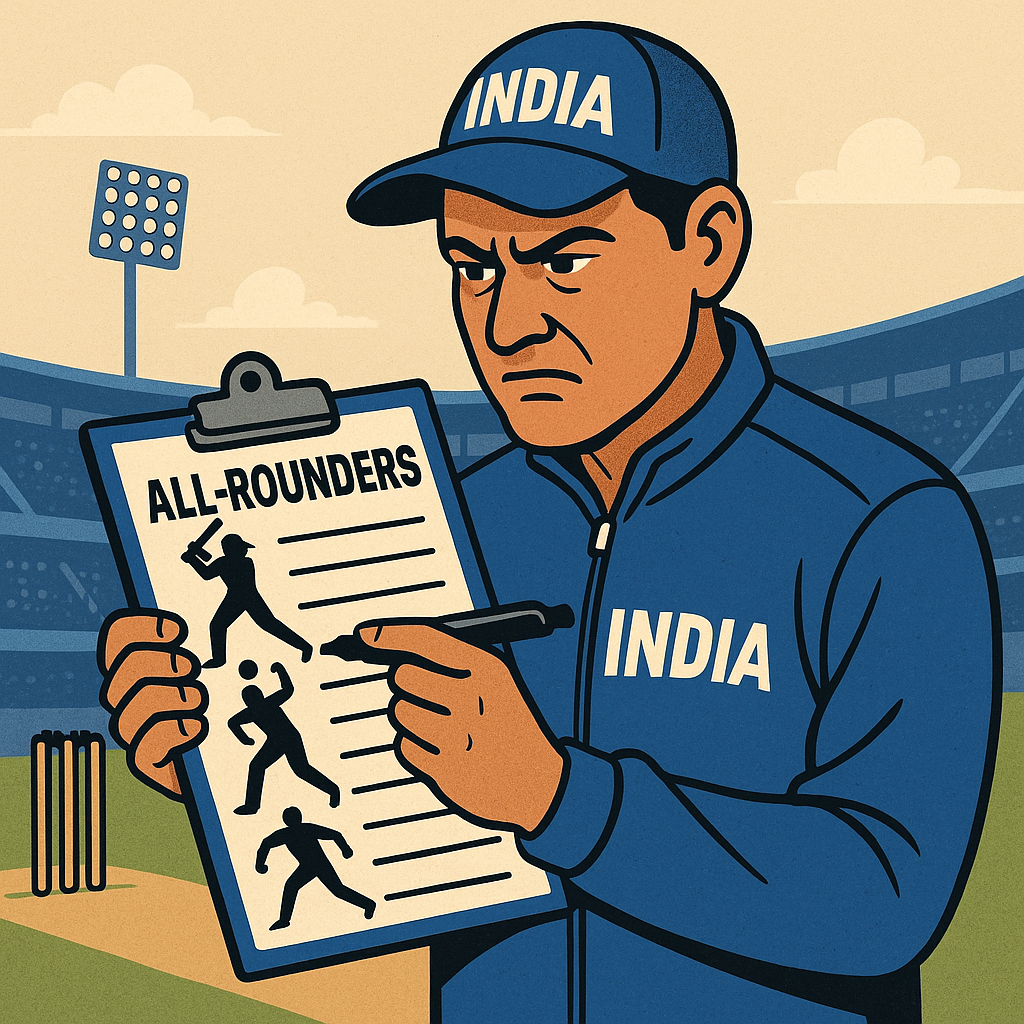
Team India’s obsession about allrounders has suddenly become a talking point again after the disappointing loss in the first Test against South Africa. India are known for being almost unbeatable at home, yet they somehow let South Africa walk away with a win in conditions that usually suit Indian cricket perfectly. It felt less like India were outplayed and more like they were let down by their own team balance and selection calls.
The outcome has raised serious questions about India’s selection strategy and the new coaching philosophy that seems to value multidimensional players over proven specialists.
Test cricket has always been a game of specialists. It is the format where the finest batters grind through long spells, the best bowlers hunt for wickets with patience and skill, and roles are clearly defined. If a player is good enough to be selected purely as a batter or purely as a bowler and can then contribute with a secondary skill, it becomes a bonus. But selecting players mainly because they can do both roles equally and not because they excel in at least one primary discipline can lead to an unstable team structure. This is exactly what India seems to be struggling with right now.
Understanding Team India’s Obsession About Allrounders in the Gambhir Era
Under the leadership of Gautam Gambhir, India’s selections have shown a clear tilt towards allrounders. The idea may have been inspired by the rise of multi-functional cricketers in modern white ball formats. In T20 cricket, a team filled with players who can bat, and bowl offers flexibility and tactical freedom. But Test cricket is different. Test matches are not won by flexibility alone. They are won through consistency, discipline, and the reliability of specialists trusted to perform their primary roles at the highest level.
This focus on allrounders is genuinely useful in white ball cricket, where teams gain a big advantage by using batters who can bowl and bowlers who can bat. Limited overs formats reward versatility, and I recently discussed several such options in Indian cricket in an article on batters who can bowl. These players add depth and balance in ODIs and T20s. However, what strengthens a white ball team does not always translate well into Test cricket. The longest format still demands specialists who can perform their main role at a high level for long periods.
The recent selections seem to ignore this fundamental truth. Players are being picked because they offer a bit of everything, but in Test cricket, a bit of everything often becomes not enough of anything. The batting line up lacks solidity because genuine top order batters are missing.
When this approach fails, the match slips away slowly but surely. This is what happened against South Africa. India did not have enough specialist batters to build big total in first innings and change the target in the second innings.
Test Cricket Rewards Specialists More Than Utility Players
There is a reason why the most successful Test teams in history relied heavily on specialists and maybe one odd allrounder who could be used occasionally. India also had the luxury of Ravindra Jadeja and Ravichandran Ashwin as an allrounder but even if they did not bat, they would still be picked as specialist bowlers based on their skills. These players were not picked because they could provide a few runs down the order. They were picked because they were world class at their primary skill. Their secondary contributions, if any, were simply additional value.
Today, however, the Indian team is trying to break this formula. Instead of trusting domestic performers who have proven their batting or bowling calibre over long seasons, the focus is on players who can do two things but may not be best in either. This trend has watered down the quality of both departments.
When India picks three or four allrounders in the same playing eleven, the team ends up with no real specialists in certain roles. A bowler who only bowls ten overs in a day cannot build pressure. A batter who averages around thirty cannot be expected to carry the batting on tough days. Over time, this leads to repeated collapses and failures in home Tests where India once dominated confidently.
India’s Decline At Home Is Not A Coincidence
A 3-0 loss to New Zealand at home was already a worrying sign. New Zealand are a strong team overall but historically have struggled badly in India. Indian spinners used to run through their batting line up and Indian batters used to pile up runs. Losing a home series to them was a shock in itself.
Now, losing the first Test to a South African team that is relatively inexperienced in subcontinent conditions makes it worse. Both teams have taken advantage of India’s weakened structure. They did not beat a strong Indian side. They beat a confused one.
The decline is not a coincidence. It is directly connected to the selection mindset. When a team stops picking the best batters and the best bowlers in favour of players who can do a little bit of both, the overall quality drops. Home dominance comes from overwhelming superiority in spin bowling and solid top order batting. Currently, India seem to have neither.
Does The Allrounder First Philosophy Work In Any Test Team
There are examples of teams that used allrounders smartly but never at the cost of their specialists. England with Ben Stokes always paired him with at least three genuine pacers and a frontline spinner. Even South Africa used Jacques Kallis but surrounded him with world class specialists bowlers.
The common pattern is clear. Allrounders add value when the core structure is already strong. They cannot be the foundation of a Test team. They cannot replace specialist batters or bowlers. They can only enhance them.
India seem to be trying the opposite approach. They are building the foundation around allrounders and then hoping specialists will manage from the edges. This is the wrong direction for Test cricket.
The Way Forward For India
If India want to regain their home dominance, they must go back to the basics that made them unbeatable for decades. That includes selecting top domestic batters who have scored thousands of runs in first class cricket, picking frontline spinners who know how to operate on Indian pitches for long spells, and trusting genuine pacers instead of medium pace allrounders.
The team must stop overvaluing the ability to chip in with both skills and start valuing world class performance in a primary skill. If a batter can bowl a few overs, good. If a bowler can bat at number eight and hold the bat, good. But these factors should never override core selection criteria.
India cannot afford to repeat the mistakes of the recent series. They cannot let an obsession about allrounders weaken their Test identity. The fans expect better, the conditions demand better, and the history of Indian Test cricket shows that the formula for success is already known.
Test cricket remains a format of specialists. Teams that respect that truth succeed. Teams that ignore it struggle. India have learned this lesson before and they are learning it again now. The faster they correct the course, the better their chances of protecting their proud home record and returning to the top of world Test cricket.






One Comment